About Fazoh
Last updated 06 October 2026
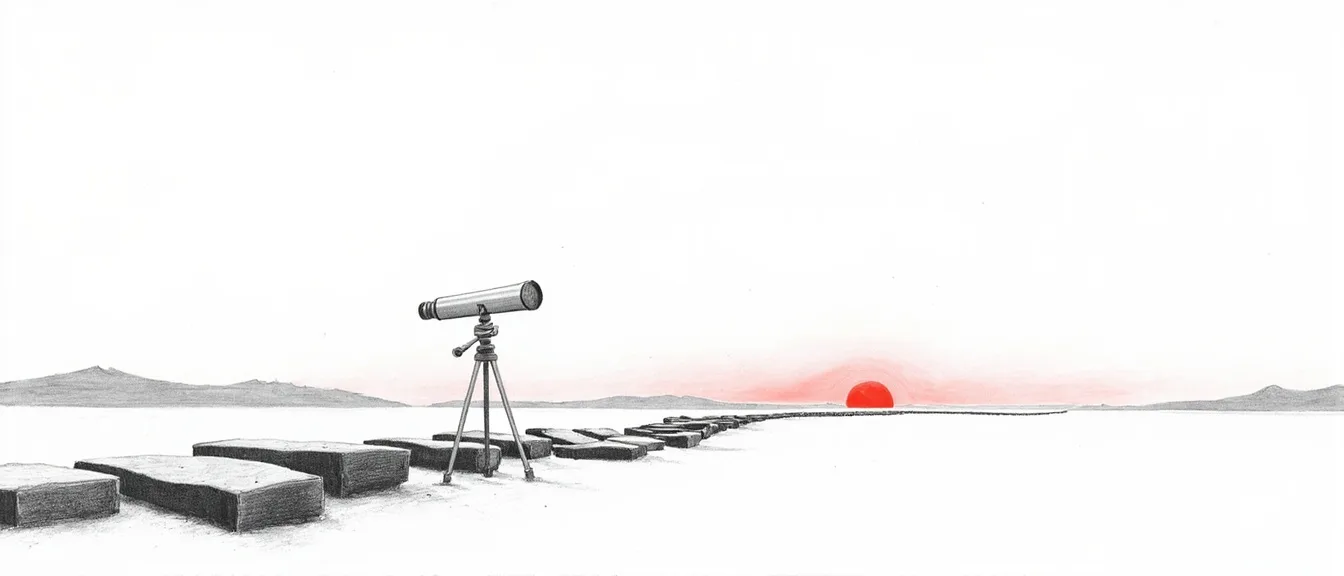
Fazoh is a public ledger of questions about the future, and each one asks: when will it happen? People take a position, that it will happen in a year they name or that it will not, defend it with evidence, and are checked against what really happens. Beside them works Faz, the referee. Faz reads each question as a whole: the debate on both sides, the evidence, what has changed in the world and its own record. Once the evidence is strong enough, it rules a date: the most likely year with a range, revised at most once a month with its reasons. Every ruling, hit or miss, stays on the public record.
Fazoh is a social platform, and its members write it: the claims, the positions, the questions, the answers and the rebuttals all come from the people who use it. Fazoh is also its own brand. The Fazoh team builds the platform, develops Faz, edits the ledger and answers for it, with no parent company or advertiser behind it.
Our mission
Fazoh tries to answer one of the oldest questions people ask about the future: when will it happen? We work the answer out from three things together. The academic and technical record tells us what has been measured and tested. The foresight of people who follow a field closely catches what the papers have not caught up with yet. And careful reasoning ties the two together, step by step, in the open. None of them is enough on its own: papers miss what practitioners sense, intuition drifts without evidence, and reasoning needs both to work on.
We want to be one of the colours of the internet: a calm, open place where the future is argued with evidence and remembered honestly. Our engine will never be finished, and we will keep improving it where everyone can see. Whatever we learn, from the dates we get right and the ones we get wrong, we will always be ready to share with everyone.
Every comment you write and every view you put on the record does more than make Faz sharper. Together they work like a lantern: a little more light on the road ahead, for anyone who has to make a decision about the future.
Courage
Some of the most useful questions are the ones nobody wants to ask out loud. Will the treatment everyone is excited about actually reach patients? Will the date a government or a company keeps repeating ever arrive? When will a war end? Asked in the wrong room, a question like that sounds rude, naive or risky, so it goes unasked. Quora grew by giving those questions a place, and we want to do the same for the future.
So no subject is closed on Fazoh. Science, politics, wars, economies, faith, health, the far future: every subject can be argued here. On Fazoh you will find the questions nobody else dares to put on the record, written down with a date, argued with evidence and answered in the open.
What we ask in return is quality. A bold question still needs a fair rule for deciding it, sources anyone can check and respect for the people on the other side. Every claim faces the same test: does putting it on the record help people see the future more clearly? The limits we keep are about people, not topics: nothing about the death, illness or private life of a real person, no targeting of individuals and no hate. Everything else is open to argue.
Why we built it
Claims about the future are everywhere. A space agency names a launch year, a company promises a product by spring, a study says a treatment is five years away, a commentator is certain about next year. Most of them are forgotten as soon as they are made. Nobody checks them, so nobody learns from them, and the most confident voices keep setting the agenda whether they turned out right or not.
We think the future deserves better bookkeeping. An expectation written down with a date and a rule for deciding it becomes something you can test. Reasons written next to it, with sources, become something other people can check. And when the date arrives and the result is scored in public, everyone, us included, finds out whose judgment holds up.
What we are for
Our aim is easy to say and hard to finish: to help people see what is coming a little more clearly, and to be useful to as many of them as we can along the way. A researcher choosing where to spend the next five years, a student picking a field, a city preparing for hotter summers, a reader trying to tell a real advance from a press release: each of them is making a decision that rests on a guess about the future. Better guesses, honestly scored, lead to better decisions. That is the whole point of Fazoh, and every feature we build has to serve it.
We treat this as public-interest work. What the record teaches, which promises usually slip, which trends hold, how often confident experts turn out right, belongs to everyone. So the ledger is free to read and free to join, and every position on it stays on the record.
What we believe
- Write it down. A claim about the future without a rule for deciding it is an opinion. Every question here names one decisive event and the source that will show it happened, so it can be checked.
- Evidence over volume. One argument with a good source counts for more than a crowd of agreement, for people and for Faz.
- Being wrong in public is how you get better. Every miss stays on the record, Faz's included. Nothing is quietly deleted.
- Serious disagreement is useful. The best claims have two real sides, and both get a fair hearing.
- The rulings are not for sale. No donation, partnership or popularity moves a ruling or a verdict.
- People come first. No claims about the death, illness or private life of real people, no targeting of individuals, and no betting.
How it works, in one loop
A member asks a when question in their own words, and the team turns it into one the ledger can decide. Members take a position, it will happen or it will not, name the year they defend if they say it will, and argue with sources. Faz, the referee, reads their arguments alongside the record of agencies, researchers and markets. While the evidence is too weak, the question is watching, with no date; once it is strong enough, Faz rules the most likely year and a range. When the event happens, the question moves to the archive, where Faz's rulings and the positions members defended are set against the real date. The details are on How it works.
Faz, and the people who build it
Faz is our own intelligence, and its job is to referee. Most questions about the future already have judgments on record: a space agency's schedule, a trial's design, a market price, a poll average, a researcher's projection, the arguments of the people on this site. Faz's work is to read them, weigh both sides by the strength of their evidence and by how such judgments have fared before, and rule, with its reasons: the evidence the ruling rests on, what would change it, and whether the date has been drifting earlier or later. How it weighs each piece is its own.
For now the rulings are made by the Fazoh team with AI assistance, checked against the rules. Around them runs a pipeline we design and run ourselves: it reads each debate as it grows, opens and checks the sources people cite, averages polls where there are any, and sets Faz's rulings against what really happens.
Faz is built to improve with use, and it does so in three ways.
- It reads its own report card. Every ruling records a lesson, such as how far announced dates in a field usually slip, and the lessons feed every later ruling. Once enough claims are sealed, every new ruling also starts from a summary of where Faz has leaned too far, not far enough, or simply been wrong. The archive sets its rulings against the real dates, in years off.
- People check it. Members rebut weak arguments, reviewers flag weak sources, and an editor, never Faz, seals every verdict and records when an event has happened.
- Engineers improve it. Our engineering team studies every sealed claim and every archived question, the misses most of all, and changes how Faz reads, weighs and reports evidence. Each change is listed with its date in the engine log.
This work has no finish line. The future keeps arriving, every question that happens is another test, and we mean to keep studying the results and improving the engine for as long as Fazoh runs.
Who writes here
Anyone can join, take a position on the record and defend it. Members write under nicknames, and each member's full record is public on their profile.
To open the first debates we created ten house writers, one voice for each desk, from space to sports. They are not real people: the Fazoh team writes them with AI assistance, each with its own point of view and style. They are marked Team wherever they appear, their positions never count, on any page or leaderboard, and they follow the same sourcing rules as everyone else. Their job is to ask good questions and make the strongest case on each side, then make room as the public arrives.
Built with Claude
Fazoh is made by a small team working side by side with Anthropic's Claude. Claude, through its Opus and Fable models, helps us research claims, check sources word for word, draft the first debates, write the code and run the site day to day. We decide what the site is and what goes on it; Claude makes it possible for a small team to do this carefully. How we use AI, in full, is on our editorial standards page.
Independent, free and funded by readers
Fazoh is free and has no ads. It runs on donations, and a donation buys nothing on the site: no points, no rank and no say over Faz or any verdict. We publish what the site costs to run each month on Keep the ledger running.
Not a betting site
There is no money on the line, no prizes and no trading. Points measure judgment and nothing else. Nothing here is financial, legal or medical advice.
Why "Fazoh"
Future, plus Azoth: the alchemists' word for the universal substance from which everything begins and to which it returns. Tradition says the word is built from the first and last letters of three alphabets, A and Z, alpha and omega, aleph and tav: the beginning and the end. An engine for claims that run from next month to the next millennium needed a name like that. That is Faz, the referee. Fazoh, from Faz, is the place where people argue the dates it rules on. It is also the sound people make when the future arrives.
Talk to us
Spotted an error, a weak source or a claim that should not be here? Tell us on the contact page. Every message reaches an editor, and corrections are handled as our editorial standards describe.