Editorial standards
Last updated 06 October 2026
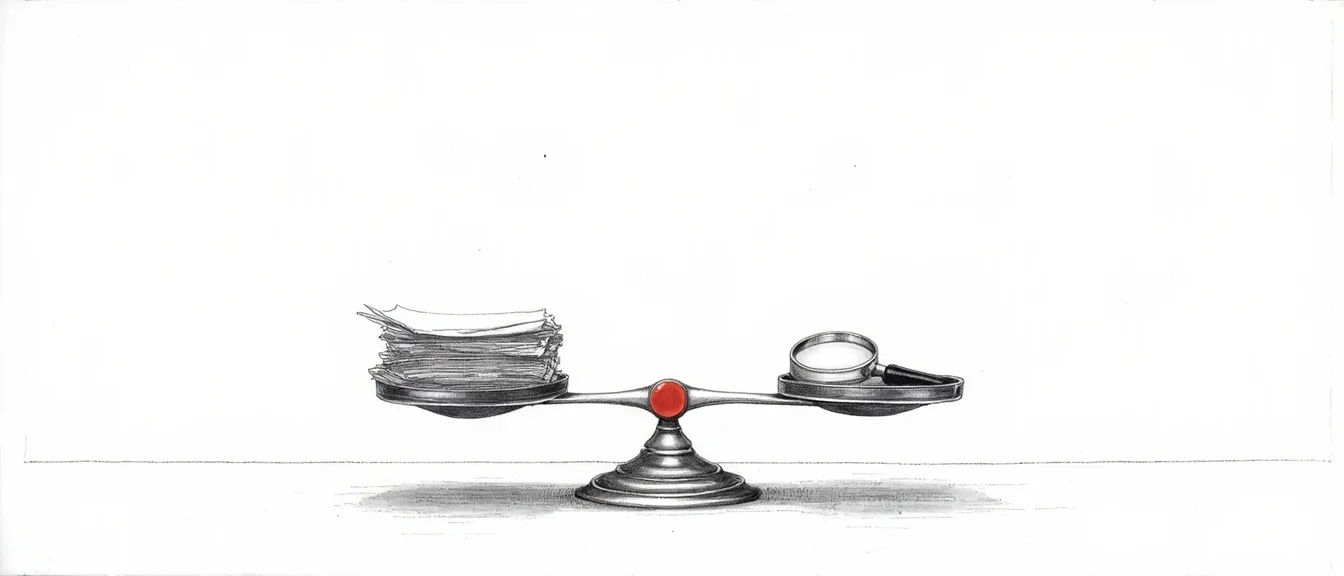
A ledger is only worth reading if it can be trusted. These are the standards we hold claims, sources, Faz and ourselves to, and what we do when we get something wrong.
What makes a question publishable
Every question on the ledger asks when something will happen, and every question is checked by an editor before it goes on the ledger. To pass, it needs:
- One decisive event. A single thing that will one day either happen or not, such as a person standing on Mars. Asked once: the same event is never asked again with another year. Other events it waits on are questions of their own, on the road to it.
- A rule nobody can argue about later. Criteria that say exactly what counts and what does not.
- A named source. The agency, record or publication that will show it happened.
- Something worth knowing. A question whose answer matters beyond the people arguing it.
We do not publish questions about the death, illness or private life of a real person, questions that target an individual, or anything that breaks the rules. Election claims follow the law of the country holding the vote, including blackouts on polls before polling day.
Sources
- Every answer carries numbered sources, each with an exact excerpt from the page it links to, so readers can check the claim against the words it rests on.
- Primary first. We prefer official data, regulators, peer-reviewed papers and the original document over an article about it.
- Checked and weighed inside. Faz opens the sources in an answer, checks that they say what the answer claims, and weighs them by how close they are to the original record. That weighing stays inside Faz: no grades are shown on sources or answers, and no answer is marked as one Faz relied on. Members can flag weak evidence, and an answer flagged by enough independent reviewers is marked as under review until an editor decides.
- Answers can be cited. Every answer has a citation with its writer, date, revision and permanent link, so it can be referenced like any other source. Revisions stay on the record, so a citation always points to the words that were there.
- Links are references, not endorsements. Links that members add carry
rel="nofollow ugc". - Nothing invented. A source that does not say what an answer claims is grounds for a rebuttal and a flag, and an editor can take the answer down.
AI, labelled
Faz is an AI-assisted engine, and we say so wherever its work appears. Its ruling on each question, a date with a range once the evidence is strong enough or no date yet while it is not, is always marked as Faz's, with its reasons: the evidence it rests on, what would change it and the reason for every revision. Faz is a referee, not a forecaster, and the numbers behind a ruling are never shown. Rulings are revised at most once a month, earlier only on a major event with the reason written down. For now they are made by the Fazoh team with AI assistance, checked against the rules, as described on How Faz works.
- Faz never closes a question. When a milestone's date arrives it proposes a verdict with sources, and an editor seals it. When an event happens, an editor records the date and the source that shows it.
- Members ask, people check. A member asks a when question in their own words; the team turns it into one the ledger can decide, with its rules and source, and the member is its first name.
- Faz is checked against reality. When an event happens, the archive sets Faz's first and last rulings against the real date, in years off, next to the positions members defended. Its full record, misses included, is public on Faz's record.
How we use AI
Fazoh is a small team that works with AI every day, and we would rather say so than leave you to guess.
- Faz's rulings are made by the Fazoh team with AI assistance, checked against the rules, as described above and on How Faz works. Claude, the team's AI assistant, helps research them; each ruling records a lesson that feeds later ones.
- Our own work is AI-assisted. The Fazoh team builds and runs the site with Anthropic's Claude (the Opus and Fable models): researching questions and Faz's rulings, checking every source against the page it comes from, drafting questions and debate posts, and writing the code. A person directs that work and decides what is published.
- Nothing is published unchecked. Every excerpt in a team post has been found word for word on the page it links to, and every fact rests on a source. When we get something wrong, the correction rules below apply to us as they do to everyone.
Our house writers
The first debates are opened by ten house writers. They are not real people: each one is a voice we created for a desk, with its own point of view and style, written by the Fazoh team with AI assistance. They are marked Team on every post and profile, their positions never count, on any page, leaderboard or anyone's rank, and they follow the same sourcing rules as members. On each question they argue both sides, from different writers, so that the public starts from a fair argument rather than from the house view. As members arrive, the debate becomes theirs. More on who writes here.
New members
For their first seven days, a new member's answers, questions and quick takes are read by an editor before they appear. After that, members publish directly, and the community and editors review what they post.
Independence
Fazoh has no ads and takes no payment for coverage. Donations buy no points, no rank and no say over Faz's rulings or any verdict. We take no side in elections, and no claim on the ledger is a position of the site.
Corrections
- Nothing disappears quietly. Answers are withdrawn, not deleted, and every revision stays visible with its date.
- Faz's changes are shown. Each new ruling says what changed since the last one and why.
- Every verdict is sealed with an editor's note and the sources it rests on. If you think a claim is worded unfairly or a verdict is wrong, tell us: an editor reviews every report and answers it.
- Mistakes in these pages are fixed and the "Last updated" date changes.
To report an error, a misleading source or a verdict you think is wrong, write to us through the contact page with a link and, ideally, the source that shows the problem. Legal and copyright notices have their own path on Copyright and DMCA.